09/10/2026
CUSTOM CONFIGURATION FOR THE FOOD INDUSTRY
In the food industry, designing a loading system requires consideration not only of the mechanical characteristics of the equipment, but also of the product itself and the conditions under which it is transferred.
This was the case for a leading global food company that needed to transfer a high-viscosity food cream into road tankers using a top-loading system.
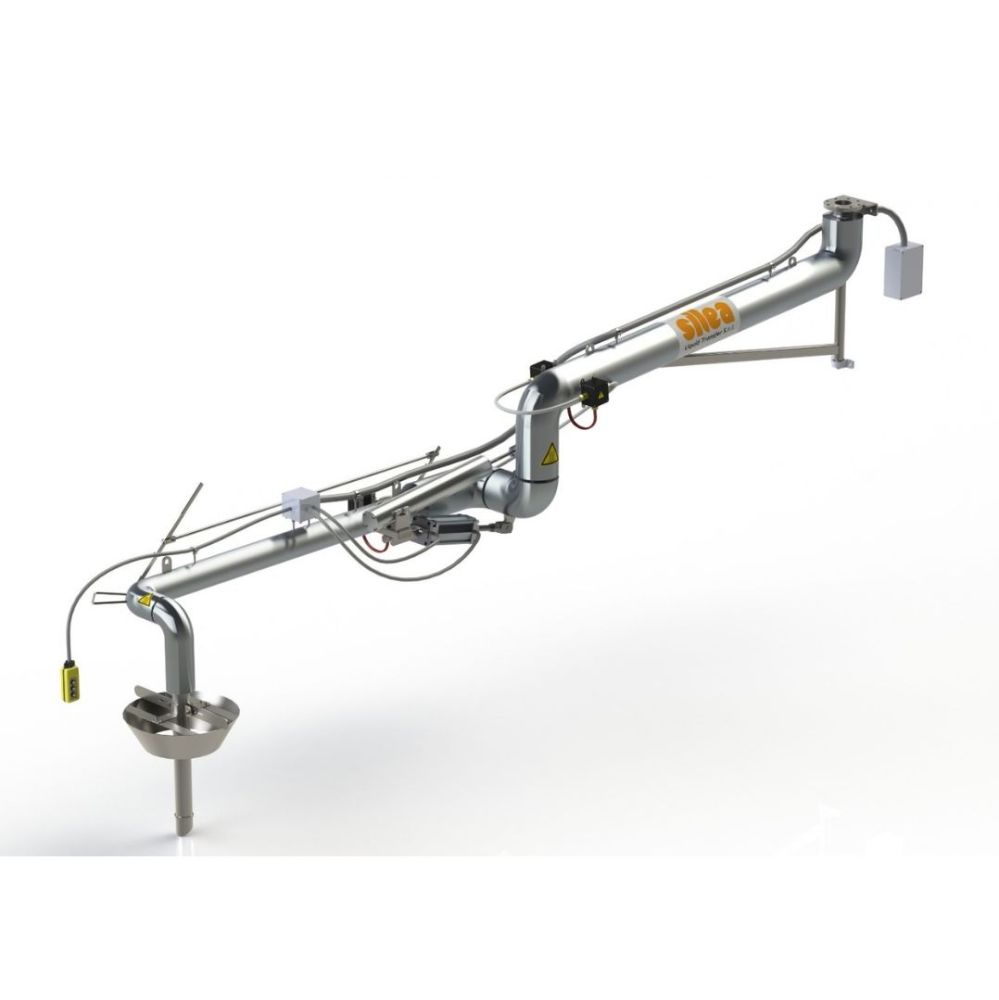
The starting point was Silea’s 1201 Series, with a 4” diameter. The configuration was then customised to meet the specific characteristics of the product and the requirements of the application.
Keeping the product fluid during loading
The first challenge was related to the viscosity of the product. As the food cream tends to harden as it cools, it had to be kept in a liquid state throughout the loading operation, at a temperature of approximately 40 °C.
Another key requirement concerned contact with the product. Since this was a food application, suitable materials had to be used, together with specific measures to minimise the risk of contamination during transfer.
The weight of the loading arm was another important consideration. A 4” arm, combined with heat tracing, insulation and the other components of the configuration, has a significant overall weight. The system therefore had to be designed so that it could still be easily operated and moved by the operator.
Heat tracing, insulation and food-contact materials
The configuration was built around the specific requirements of the product: maintaining its temperature and fluidity, selecting suitable materials, limiting the risk of contamination and managing the weight of the arm during operation. The result was a custom solution integrating these different requirements into a single loading system.
To maintain the cream at the required temperature during transfer, the arm is equipped with electrical heat tracing, which keeps the product at approximately 40 °C. An insulation layer was then applied over the heat tracing to limit heat loss and make the arm surface safer for operators.
All parts in contact with the product are made of AISI 316L stainless steel, while the seals are made of white PTFE, with materials selected to meet the requirements of the food application.
A cone was also fitted to the terminal pipe and designed to close the top manhole of the road tanker during loading. This keeps the transfer point as isolated as possible from the external environment, limiting the risk of product contamination.
Pneumatic operation and Hold Down function
The overall weight of the arm required a specific system to facilitate its movement. The configuration is therefore equipped with pneumatic operation via a cylinder, supporting the operator when positioning the arm.
The same system also enables the Hold Down function, which is particularly important during tanker filling. As the weight of the load increases, the tanker progressively lowers. The Hold Down allows the arm to follow this movement, keeping the cone in contact with the manhole throughout the loading operation.
This prevents a gap from forming between the cone and the tanker, maintaining closure of the loading point even as the tanker progressively lowers. The configuration is completed by a vibrating level switch for level monitoring, preventing the product from overflowing from the road tanker.
A solution designed for the entire operating cycle
The design also took the post-loading phase into consideration. After each use, the arm is emptied through an internal steam-cleaning process carried out by the customer.
This aspect is also part of the overall approach to the solution: the arm is not considered simply as a tool for transferring the product, but as part of a process that includes loading, handling, monitoring and subsequent cleaning.
From custom-made to a standard system
Originally developed several years ago as a custom solution, the configuration proved so well suited to the customer’s operational requirements that it was subsequently replicated across several of the company’s facilities, which has numerous production sites and loading points worldwide.
Over the years, Silea has therefore manufactured numerous loading arms with the same configuration. What began as a specific requirement led to a customised solution that, after being tested and adopted by the customer, ultimately became a standard for its applications.